
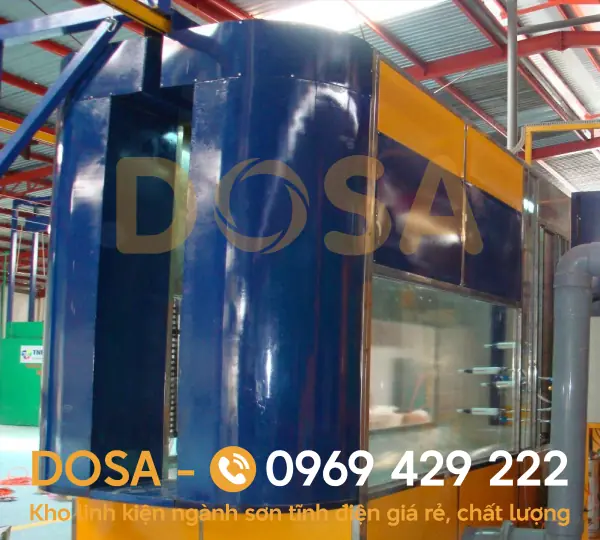
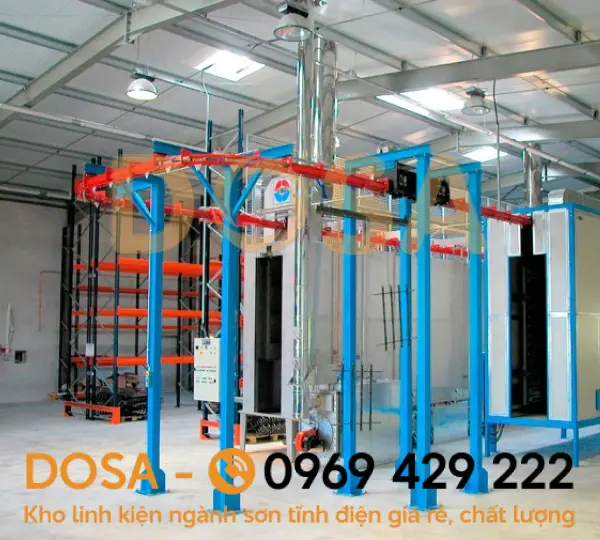
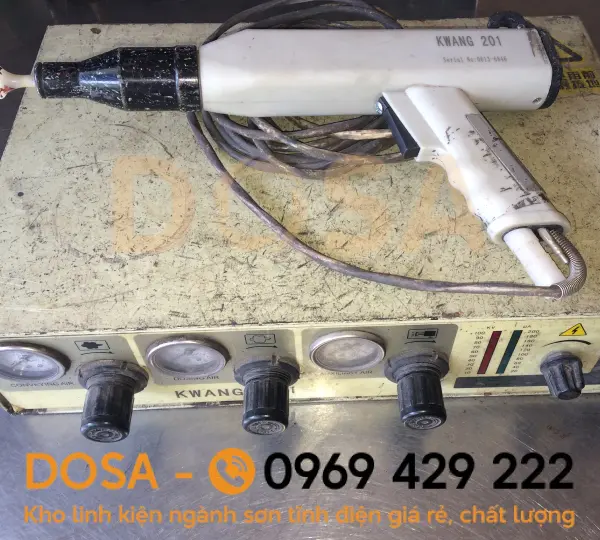
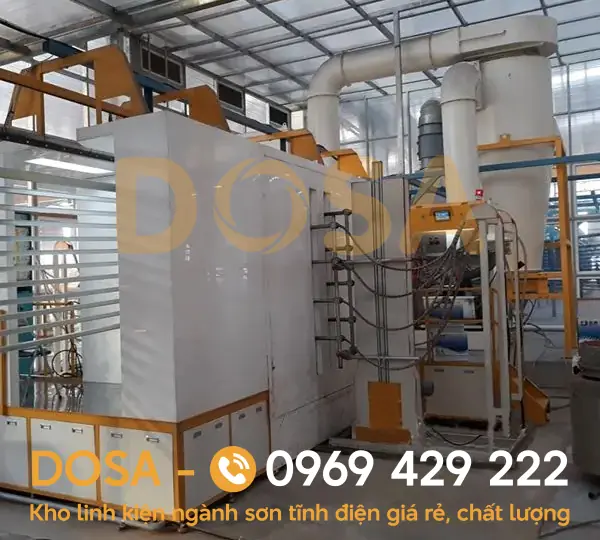
An electrostatic powder coating booth is the area where powder is applied to the product surface. A suitable solution depends not only on the booth dimensions, but also on the spraying method, airflow, powder collection, color changes, product handling, and site conditions.
This page helps businesses understand the main component groups, the information to prepare, and the points to review before building, repairing, or upgrading a powder coating booth. Specifications and the scope of supply can only be determined after DOSA receives sufficient information about the actual conditions.
What is an electrostatic powder coating booth used for?
In a powder coating line, the booth creates a dedicated work area for spraying. Airflow is arranged to help collect powder that does not adhere to the product, limit powder from spreading into the surrounding area, and direct it to the filtration or recovery section according to the system configuration.
A spray booth does not replace surface preparation, drying, or curing processes. When planning a coating line, the relationship between the pretreatment area, spraying area, curing oven, product transport method, and operator work area must therefore be clearly defined.
Selecting a spray booth by operating method
Manual spray booth
The operator uses the spray gun directly and adjusts the spraying technique for each product. This configuration may suit lower output, varied products, or frequent product changes. The standing area, working reach, lighting, and extraction airflow should be considered together.
Semi-automatic spray booth
Some operations may be assisted by hanging fixtures, conveyors, or fixed gun assemblies, while the operator still performs touch-up spraying and checks the surface. There is no single semi-automatic configuration; it is important to define exactly which operations are mechanized or controlled.
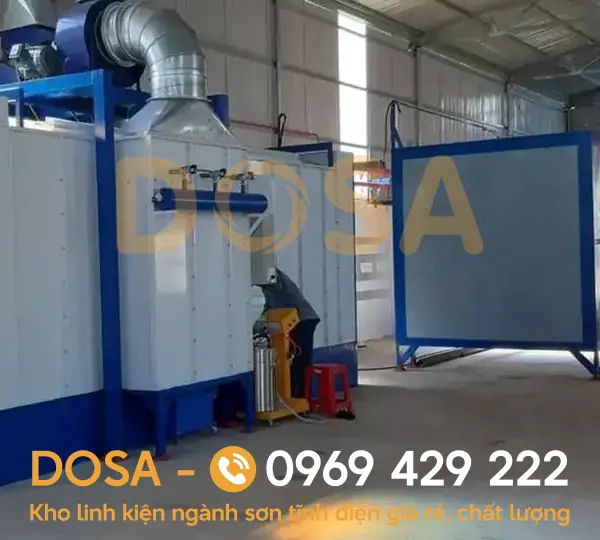
Automatic spray booth
An automatic spray booth is usually considered as part of the full production line and is directly related to conveyor speed, the number and position of guns, product detection zones, controls, powder recovery, and color-change requirements. The design must be based on the production cycle rather than simply enlarging a manual booth.
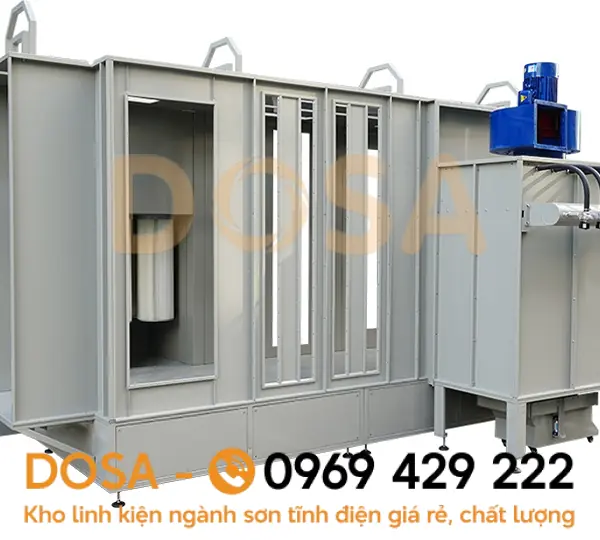
Components to define in a spray booth system
- Booth chamber and walls: define the working dimensions, entry and exit openings, operator positions, and ease of cleaning.
- Airflow: the extraction and air distribution arrangement must suit the booth shape, spraying zone, and dust collection equipment.
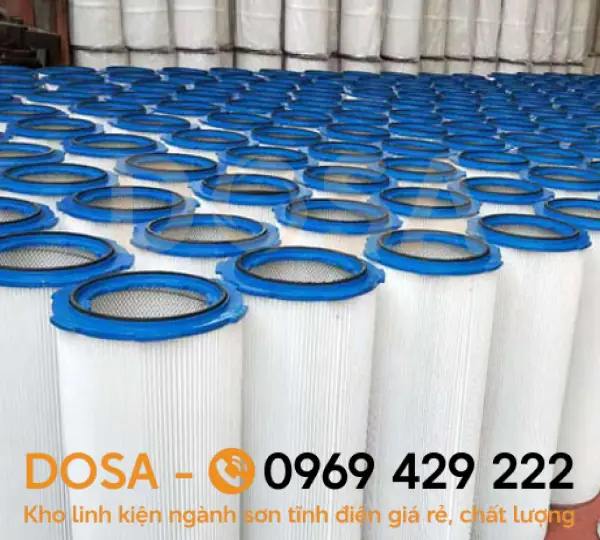
- Filter assembly: includes the filters, housing, ductwork, and filter-cleaning mechanism according to the system design.
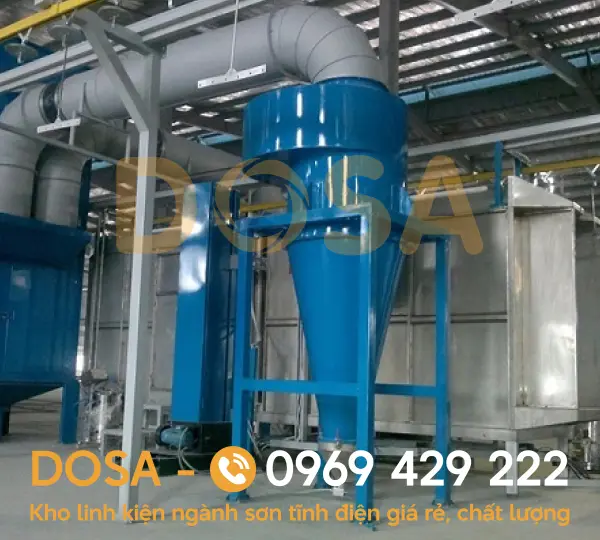
- Powder recovery: may use direct filtration or a combination of cyclone and related equipment, depending on whether the powder needs to be reused.
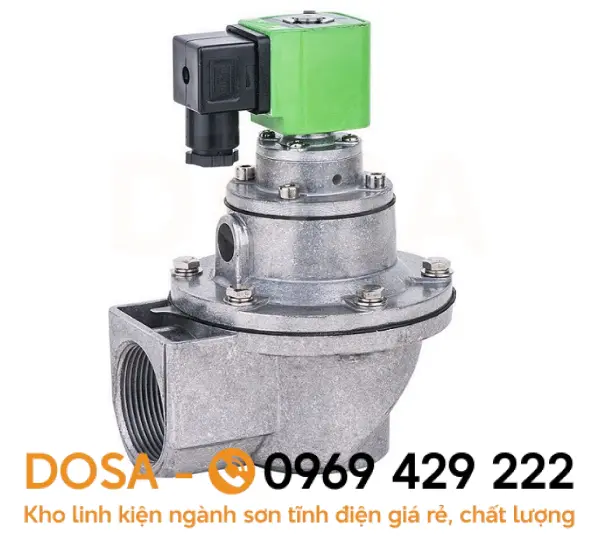
- Mechanical shaking or air pulse: helps clean the filter surface in systems designed for these mechanisms.
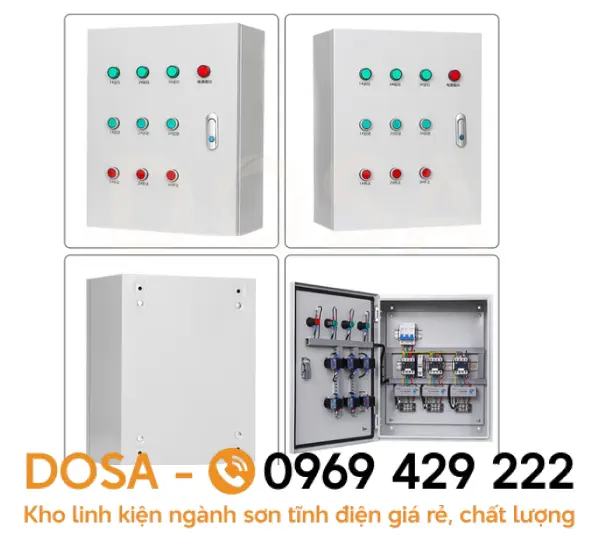
- Control cabinet: operates the fan, valves, shaking mechanism, interlocks, and other equipment included within the defined scope.
- Compressed air and electricity: pressure, flow rate, air quality, and the available power supply must be confirmed before selecting equipment.
- Grounding and work area: must be considered in relation to the complete coating system, electrical equipment, and site conditions.
- Product transport: hanging trolleys, rails, conveyors, or manual handling methods affect the booth dimensions and openings.
The items above are not automatically included in every quotation. The scope should clearly state which equipment will be supplied, which parts will be reused, and which items the customer will prepare.
Information to prepare before consultation
- Product dimensions and weight: provide the largest and smallest items, along with how the products will be hung or placed.
- Target output: the required quantity per hour, shift, or day, together with the expected operating time.
- Spraying method: manual, automatic, or combined, and the number of guns currently used or planned.
- Powder type and colors: the number of colors normally used, the frequency of color changes, and cleaning requirements between colors.
- Recovery requirement: confirm whether the powder needs to be reused or only collected for disposal under the company’s procedures.
- Available space: the length, width, height, transport access, and clearance for the fan, filters, or cyclone.
- Utilities: the electricity, compressed air, and existing ventilation conditions at the installation location.
- Existing system: overview photos, plus photos of the electrical cabinet, filters, fan, cyclone, filter-cleaning valves, and any abnormal conditions.
- Parts to retain: equipment that remains usable, allowable downtime, and the expected repair or upgrade scope.
Photos and videos support an initial discussion but do not fully replace dimensions, wiring diagrams, or an on-site inspection when the work involves structural or operational changes.
Select the filtration and powder recovery system by objective
Direct filtration with filters
In some configurations, powder-laden air passes through the filter assembly and the powder is retained there. Operating performance depends on filter area, airflow, filter condition, system tightness, and the cleaning cycle. Filters should not be replaced based only on their external appearance.
Recovery with a cyclone
In some systems, a cyclone separates part of the powder before the air continues to the filtration stage. This option should be evaluated together with powder reuse requirements, color-change frequency, airflow, and the collection method. A cyclone is not required for every spray booth.
Color changes and system cleaning
When multiple colors are used, the time required to clean the booth, powder lines, guns, cyclone, and recovery assembly can directly affect the operating plan. The business should describe the color groups normally used and the required level of cross-color contamination control so that a suitable configuration can be selected.
Signs that the system should be inspected
Excessive powder escaping from the booth
Possible causes include extraction airflow, spray position, booth openings, filters, the fan, ductwork, or operating technique. It should not be assumed that increasing fan capacity alone will solve the problem before the full air path and operating conditions have been checked.
Weak or uneven extraction
Powder-loaded filters, duct leaks, an unsuitable filter-cleaning mechanism, or problems with the fan or control cabinet can produce similar symptoms. Record when the issue occurs, the equipment status, and the most recent system changes.
Cleaning cycles are becoming shorter
If the filters clog quickly or the system must be stopped frequently for cleaning, review the powder load, filter area, cleaning mechanism, compressed-air quality, and operating procedure. Replacing parts without addressing the cause may not prevent the issue from recurring.
How DOSA handles spray booth requirements
- Information intake: product details, output, photos of the available space or existing system, and the issue to be addressed.
- Initial review: clarify the spray booth scope, related equipment, reusable parts, and missing information.
- Confirm the working approach: agree on whether further site assessment, equipment supply, repairs, or discussion of a production-line solution is required.
- Scope-based quotation: a quotation is prepared after the main items and each party’s responsibilities have been confirmed.
On-site assessment, fabrication, transport, installation, or commissioning will only be defined after both parties agree on the specific scope. This page does not replace technical documentation or a quotation.
Operating and maintenance notes
- Follow the instructions for the equipment in use and the safety procedures approved by the business.
- Inspect the condition of the filters, ductwork, fan, filter-cleaning valves, and leak points on a schedule appropriate to the operating intensity.
- Do not change control settings, electrical connections, compressed-air connections, or the dust collection structure without first assessing the effect on the entire system.
- Keep the work area clean, control ignition sources, and provide grounding in accordance with the system’s technical requirements.
- When a fault occurs, record the time, symptoms, and operating conditions to support the cause investigation.
Frequently asked questions about electrostatic powder coating booths
How do manual and automatic spray booths differ?
The difference is not limited to booth size. It also involves the spraying method, number of guns, product handling method, control requirements, output, and production-line layout.
Does every spray booth need a cyclone for powder recovery?
No. A cyclone suits certain powder recovery configurations. Whether it should be used depends on powder reuse requirements, color-change frequency, airflow, and the overall design.
How should filters be selected for a spray booth?
Filters must be matched to the existing housing, airflow, cleaning mechanism, powder characteristics, and equipment recommendations. Dimensions alone are not enough.
Can an existing spray booth be upgraded?
An upgrade can be considered after the structure, extraction airflow, filters, recovery equipment, electrical cabinet, grounding, and installation space have been inspected and the required work has been defined.
What information is needed for spray booth consultation or a quotation?
Provide the product dimensions, output, spraying method, number of guns, color-change and powder recovery requirements, available space, utilities, and photos of the area or existing system.
When the name of the part to be replaced is not yet known, customers can send overview photos and close-up photos of the relevant section. DOSA will review the information, compare it with the available data, and discuss any points that still need clarification.